
Mile
How to Run a Faster Mile: A Coach’s Guide
TR Performance · Coach Travis Mahoney
A faster mile is not built by racing a mile in training every week. Build the capacity to run, practice the rhythm you need, and leave enough recovery to make that work useful.
Identify what breaks down
Review your last race in parts. Did you start too fast, lose position in the middle, or reach the final lap without another gear? Split times and your own description of the race help separate pacing mistakes from preparation needs. A difficult finish does not automatically mean you need more speed sessions.
Look at the weeks before that race as well. Missed easy running, repeated hard days and poor sleep can undermine otherwise good workouts. The first improvement may be a more repeatable week, not a more ambitious session.
Build aerobic consistency
Easy running is part of mile preparation because it supports the aerobic demands of the event and allows training to continue between harder sessions. Choose a level you can repeat. Your current training history is the starting point, not the mileage of an elite athlete.
Consistency does not mean ignoring fatigue. If an easy day becomes another hard effort, the week loses its contrast. Keep demanding days purposeful and leave genuinely easier days around them. Increase training only when the existing routine is being absorbed.
Give faster sessions a clear job
Short, relaxed strides, sustained controlled work and repetitions near race rhythm serve different purposes. They are not interchangeable ways to prove fitness. Before a session, know the intended effort and how recovery supports that intention.
Threshold work is intended to develop sustained aerobic performance without becoming a race. A goal mile pace is not a threshold pace, and forcing the two together creates unnecessary intensity. Use your coach’s prescription and current fitness rather than a time you hope to run later.
Practice the middle of the race
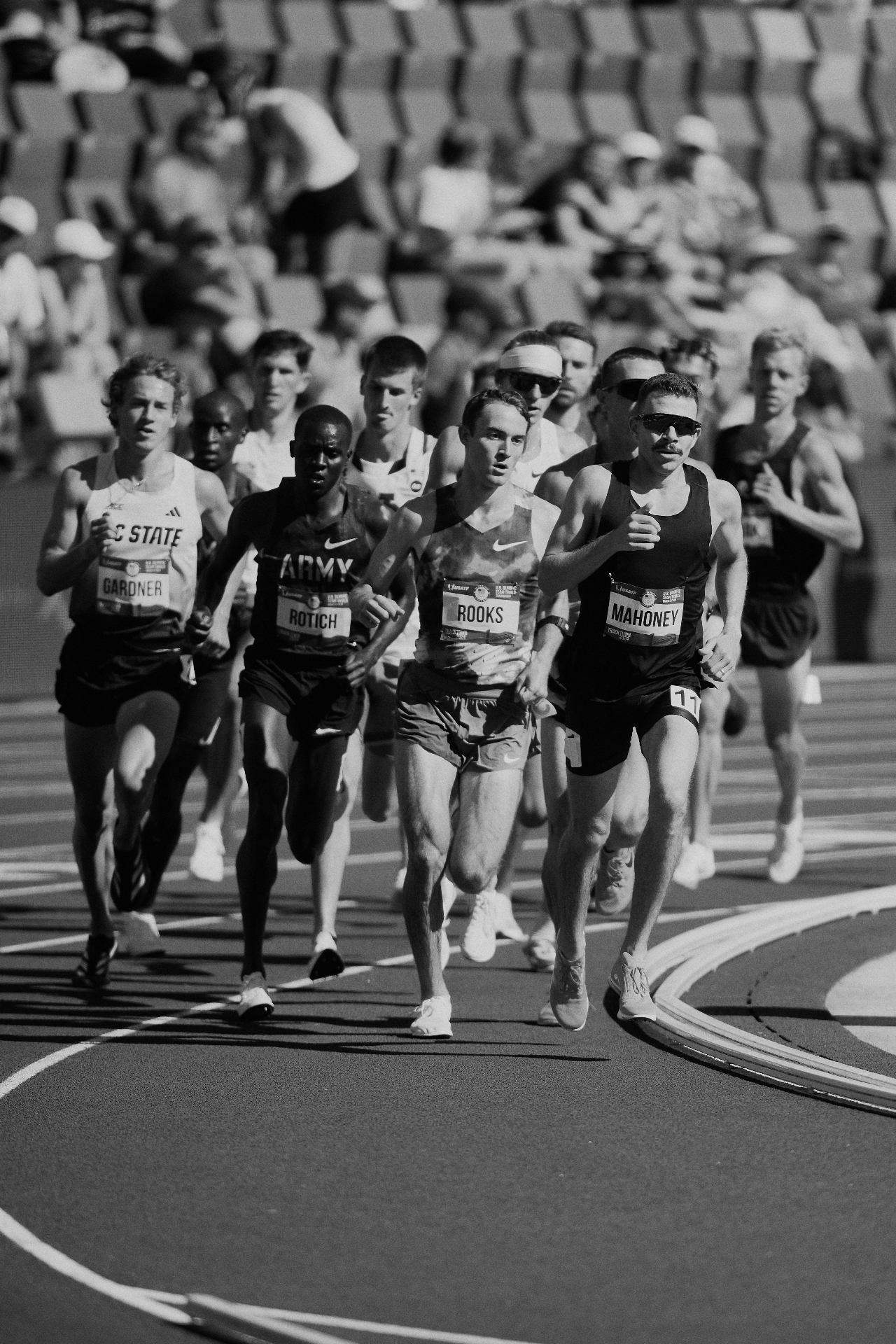
The start is exciting and the finish has a clear endpoint. The middle requires decisions when neither is available. Plan an opening rhythm that leaves you able to respond, then use the middle laps to stay engaged rather than waiting passively for the bell.
Practicing rhythm does not require an all-out time trial. Controlled repetitions can make an intended pace familiar. On race day, account for position, wind and the competition rather than treating a split sheet as a guarantee. Discuss tactics with your coach before the meet.
Put the pieces in a season
An illustrative week separates a controlled aerobic session from a race-rhythm session with easy or recovery days. A meet replaces demanding work rather than being added to it. There is no universal number of repetitions or miles that fits every runner reading this.
The TR Performance 1500m and mile plan organizes 54 adjustable workouts across 3 phases. It offers a framework for preparing for the event, not a promise of a specific improvement. If you need help interpreting your race history or combining team training with the plan, ask for coaching guidance.

Written by Coach Travis Mahoney
Sub 4 miler (3:57) as an athlete and as a coach · 4x US Olympic Trials qualifier
More about TravisReferences and further reading
General training guidance, not an individual prescription. Coordinate changes with your coach, particularly when combining training with a team program.
Prepare for your event
An adjustable 54-workout, 3-phase plan, or coaching built around your season.